Loading magazine…
Loading magazine…
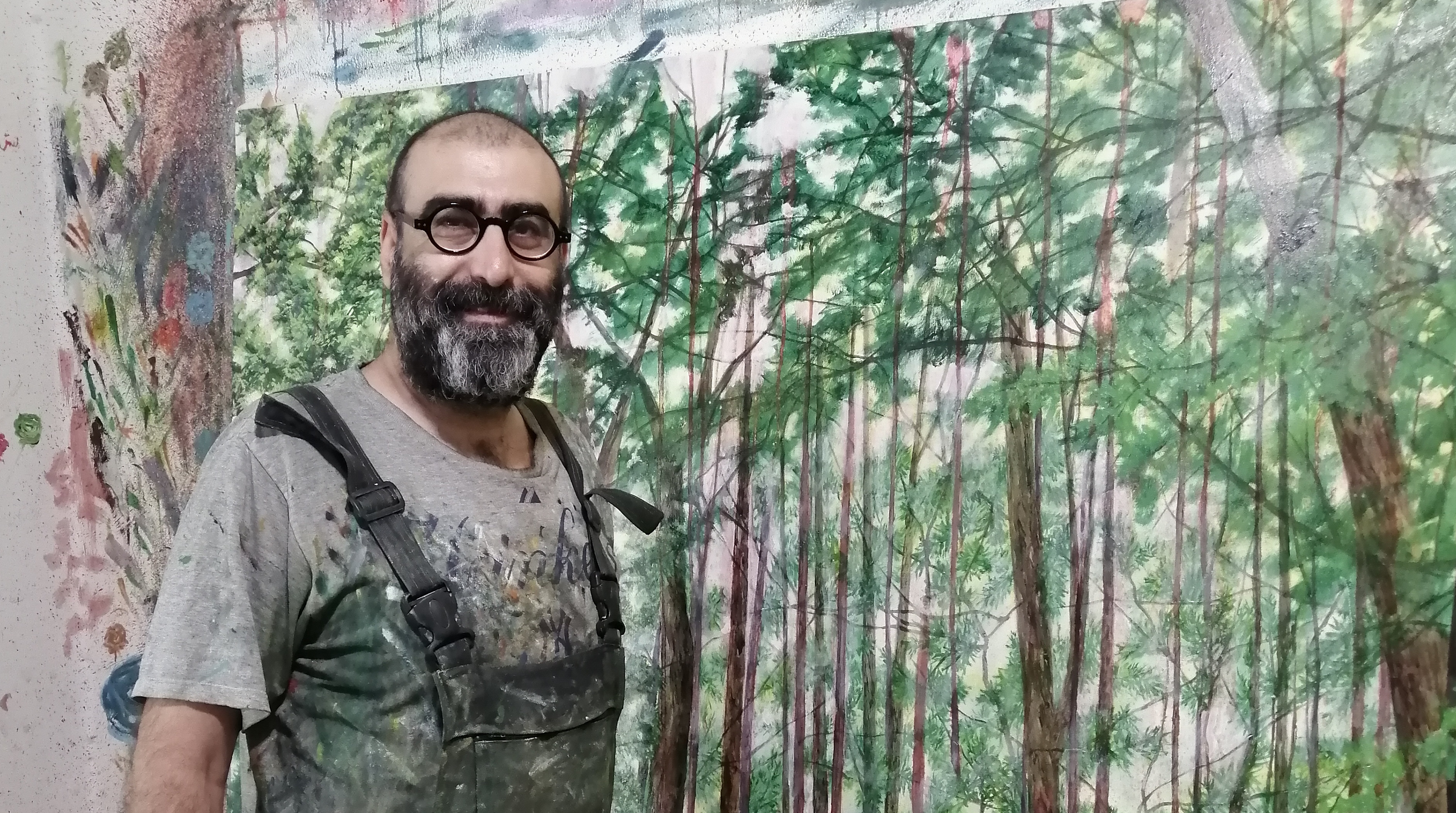
Interviewer: Behrang Samadzadegan
You are right. This series has had many ups and downs. I feel like, in the beginning, "Out of Context" didn't receive the attention it deserved inside Iran. However, it found its way over time. A curator advised me to continue these works and showed them in a solo exhibition in Boston, United States. Another curator saw the works in Boston and then showed them in a group exhibition in Massachusetts. And then another show happened in Norway. As you mentioned, many collectors in Iran still want to own a piece or two from "Out of Context". The fate of these pieces is also interesting and exciting to me.
Back then I was at university, and how interesting that you still remember it.
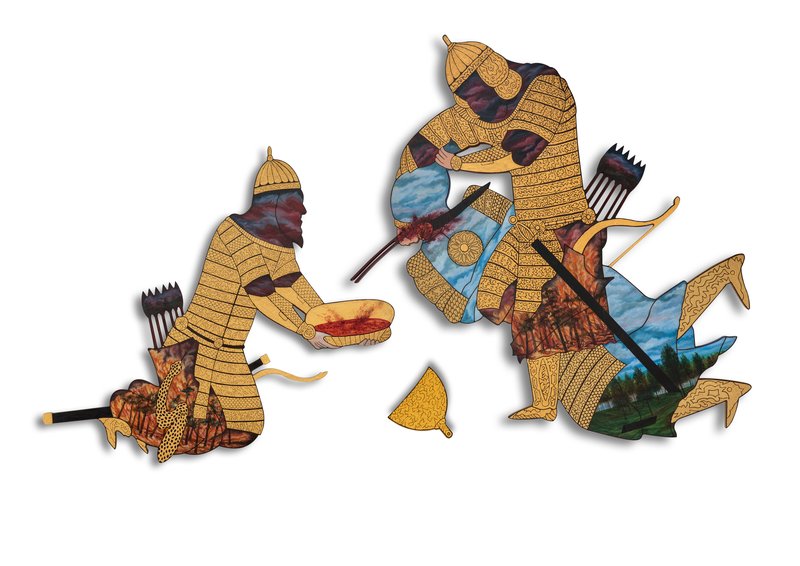
You have referred to two things. Firstly, you talked about my background, which was so interesting. When I was fourteen or fifteen years old, my mother got me a book of Persian paintings that I amazingly cherished. In retrospect, I think it would have been fit for me to have liked Mickey Mouse or something like that, but I liked a book of Persian paintings anyway. At university, as you already mentioned, I had such a concern, I liked Persian painting, and I still do. My attitude to Persian painting has always been in a way that I could borrow from it, and actually, to be able to use the potential of Persian painting to generate images and to mix them with my ideas. As you said yourself, in some cases it tended to be humorous. This caught my attention when I realized many of my fellow artists are exploiting this art to make money. Back then I tried to put it on hold to approach it later on with more resolution. In "Shahnameh", for example, I am faithful to it, but in more recent series, like in the one about the Persian woman, and the likes, I haven't been faithful to Persian painting at all. In the "Babylon System" series too. I say this because I might have come to Persian painting in cases that were related to the works, but not because I wanted to put myself in the context of the mainstream. Even in this series, some might think the works to be merely decorative, or according to what is in vogue, etc. but this should be considered that despite the interest I've always taken in these themes, I have avoided them in some cases, for I didn't want them to be interpreted in such a way, or to make sure that I am not thinking about such things unconsciously. But this time around, I've come to this matter quite deliberately, and as you rightly pointed out, this time I don't have a humorous approach anymore and my work is coming from a bigger idea. And your question was about how I have separated them from their contexts.
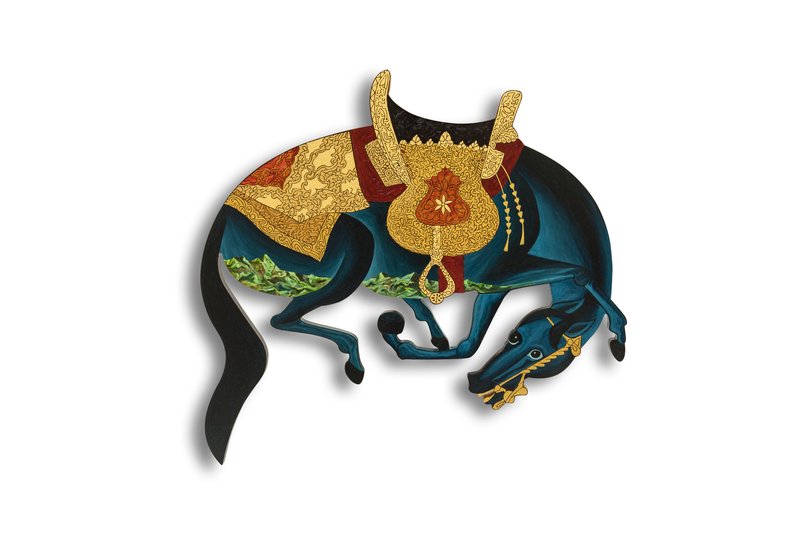
Well, in so many words, I can say that this destruction comes from my experience and study of politics, specifically from politics, and I'd like to emphasize that politics for me is not everyday politics. Politics is not a dialogue. For me, politics is not a result of a negotiation between Obama and the French president. Politics for me is political science. An approach to humanity that we know to this day from Plato and others. That's political for me and today it is more than ever. Regarding your question, I shall say, even though Persian painting has always fascinated me, that hasn't been my concern in this exhibition, and it could be about a text, or any text, instead. It could have been about the very paintings of Lucian Freud. It could have been the image of a city being built, or anything. For instance, if I would cut out the Eifel from Paris and put it in another context, what would happen to it? We're talking about the signified and signifier, what would happen if the relationship would be broken. And I finally find the answer in politics. We can consider the social or the ontology of the Eifel Tower in the context of Paris and so on. So this time Persian painting has been an excuse for me. I have used the images because I loved them, but the main point here is politics. And about my view on tradition and the presence of tradition in my works, you are right. But the destruction refers to politics.
I think we have two kinds of politics. One is the politics of power, which is based on agreements and differences; politics that sit us on two sides of a table to start and fight to resolve conflicts and to achieve a balance. Rancière believes that this is not politics of agreement. The politics of difference tries to minimize the disagreements, and in fact, politics means stepping out not stepping up. The politics of stepping out is the everyday politics and the politics of power and that politics is stepping up politics that I call the politics of emancipation. However, my series is about the politics of power; one that seeks to impose itself constantly, to gain the upper hand, and to constantly oppress others by inflicting itself as a subject. This type of politics never leads to emancipation. It always attempts to have an upper hand by using force, and the pretext is always required to justify it. Consider everything from the election to creating new regimes of power in different regions of the world. I think politics is constantly violating the organic unity of things and such is the nature of political violence that tries to empty the concepts of their essence, reproducing it to make new circumstances for negotiations. We can see this all the time. This is what I have done with Persian painting. I have to explain here that Iranian miniatures are often small and chaotic with wide compositions. These miniature, forms achieve the highest level of perfection, they are self-sufficient i.e. they produce and reproduce in themselves their aesthetic capacities, keeping it all inside so that the tiniest manipulation can cause them to collapse, as you just mentioned. In the chaos of a 20 centimeters miniature, a horse, a picture or any other element have proportions between one, two, or three centimeters. What politics are here is to remove the elements from their contexts. I have cut them and have put them out of their context. Then I blow them up, which means I inflict damage to their original form the second time. Then I see, for example when a 2cm soldier that is shaped by a simple stroke becomes one and a half meters, the previous quality won't do anymore, and so I have to produce in the new aesthetics, and so similarly, every time I make a change, and every time I use violence on them, aggrandizing them, it is like they are subjects of "discipline and punish", theoretical subjects for new discourses. I have to emphasize that "discourse" here is not that of "reformation". These are all pretexts for making new grounds for political discourses to carry on the power. So I have constantly used violence in these images until they are deprived of their essence. They are new images with new aesthetics, making possibilities for new criticisms and discourses. You can call them decorative, you can say they are meant to be sold, or you can say how beautiful they are, or masterful, or the opposite. The truth of these new discourses, I think, is to make crises. Inside the crises of politics, power can link its meditators and its relationship.
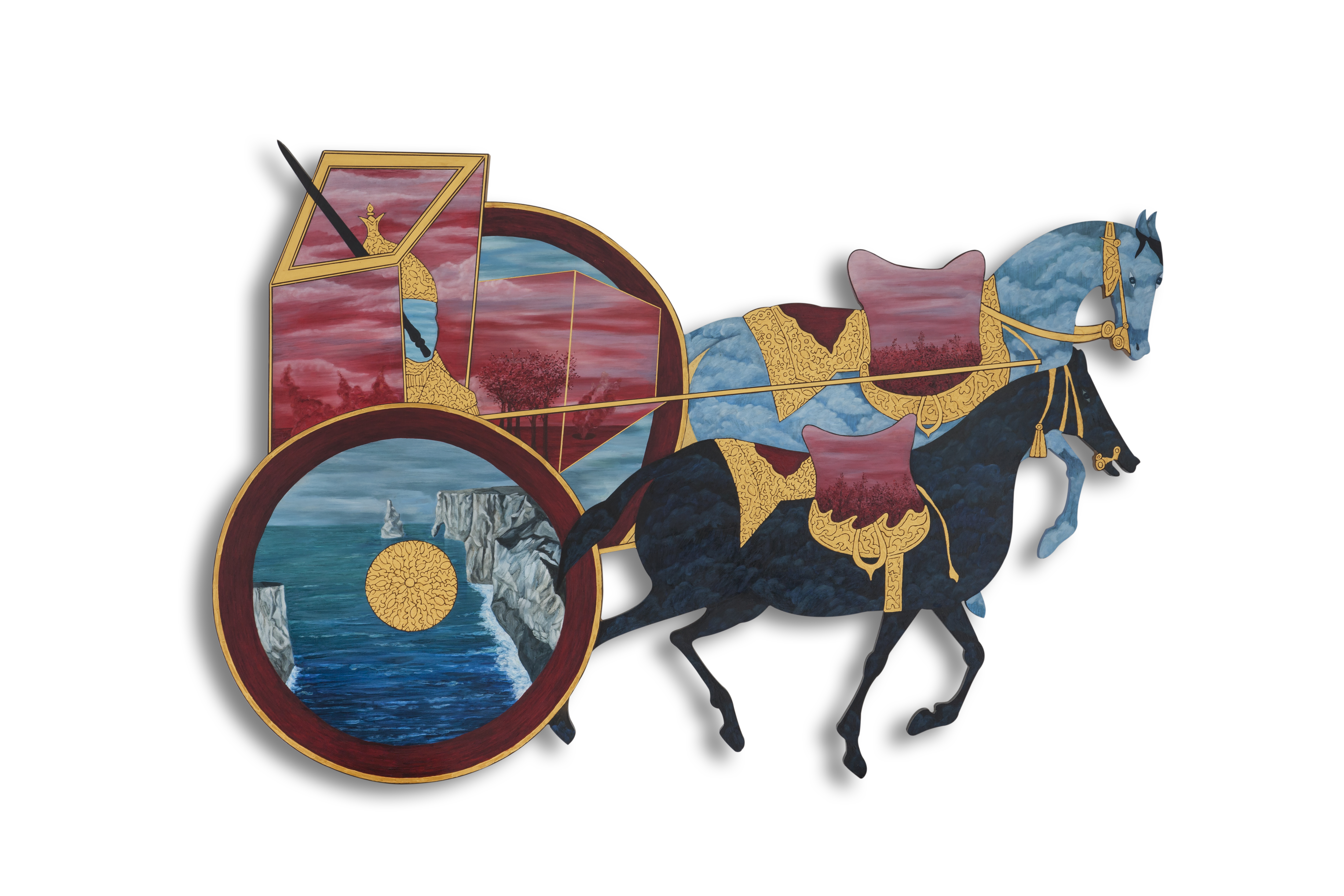
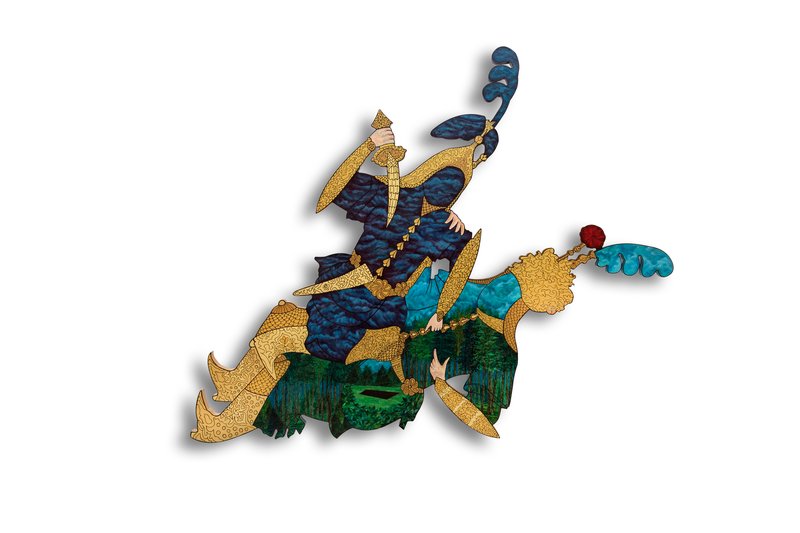
Exactly. It is the same old "big other" who always manages our conduct. As I mentioned in the statement, the exhibition takes its point of departure from within power to its boundaries in a paradoxical manner. The paradox is, I think, that by getting myself to the circle of power, I can discover new horizons for politics and freedom. This means that we can find signs of freedom even inside the circle of power and art, or the artwork can distance itself from this show and instead of making a representation, consider horizons inside which beauty can be perfected.
In a sense.
You are right.
13 Sep 2022
Conversation between Mehrdad Mirzaie & Negar Farjiani