Loading magazine…
Loading magazine…
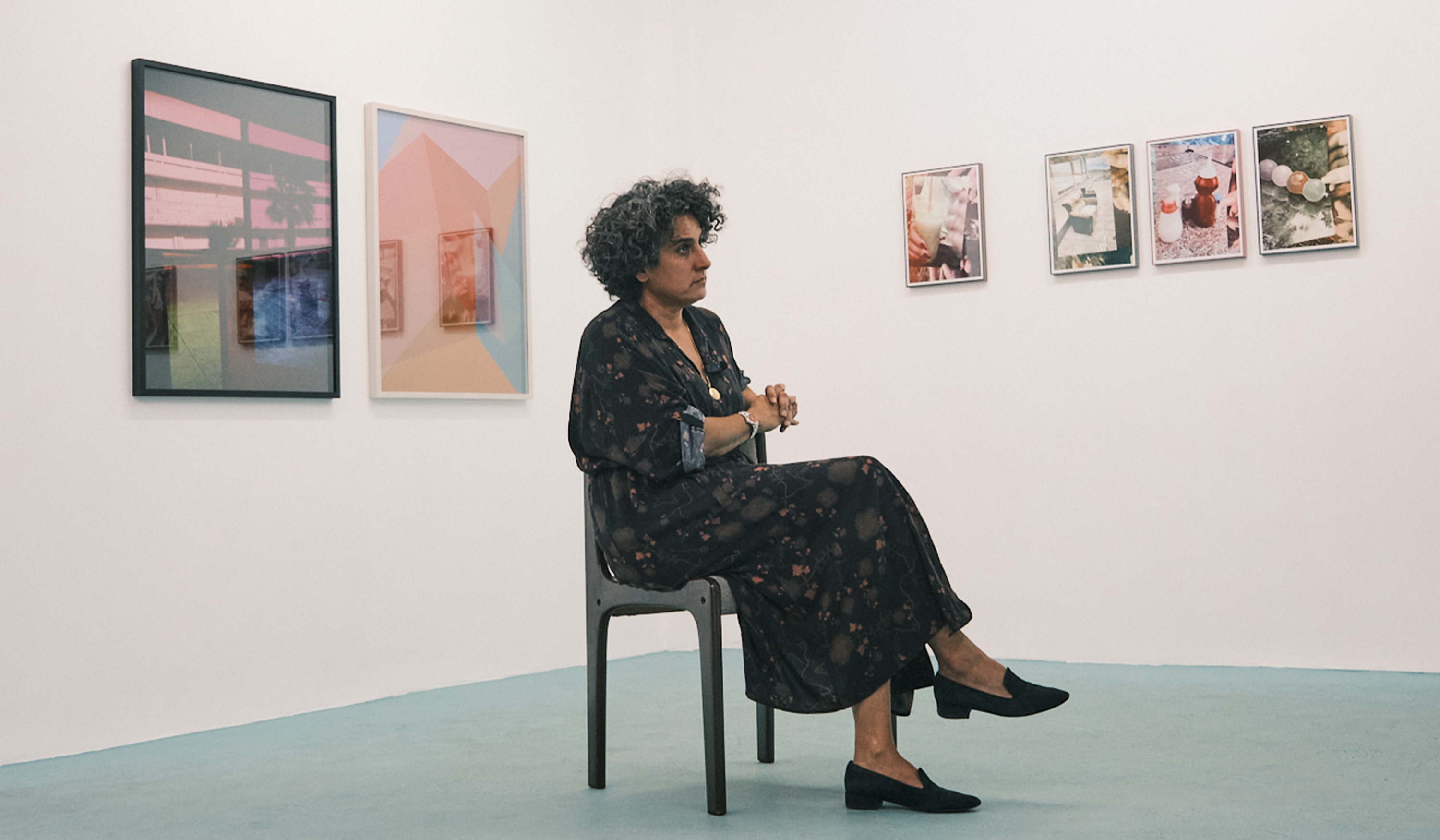
I originally wanted to become a photojournalist — that’s how it all began. I had the usual expectations that came with that aspiration, but I soon realized how idealistic that thinking was. That realization pushed me to re-examine my artistic language and what I wanted from photography.
During my studies, I entered with the idea of photojournalism and left with a completely different approach. Understanding and articulating that shift was, in itself, a major question for me. My thesis marked the first concrete step in my practice. After that, I decided what paths I didn’t want to continue and began to travel.
After a period of traveling and combining earlier works from Iran with newer ones, I had 2 children and spent some time in the studio, developing my still-life works. Later, I returned to exploring perspective, and in many ways, each stage naturally led to the next.
Now, after moving through all these phases and creating a space for myself that I’ve fought hard for, I find myself drawn to more personal subjects. This is reflected in my recently published book, in which I’ve tried to visualize, through photography, the multiplicity of spaces that exist within the human mind and heart.
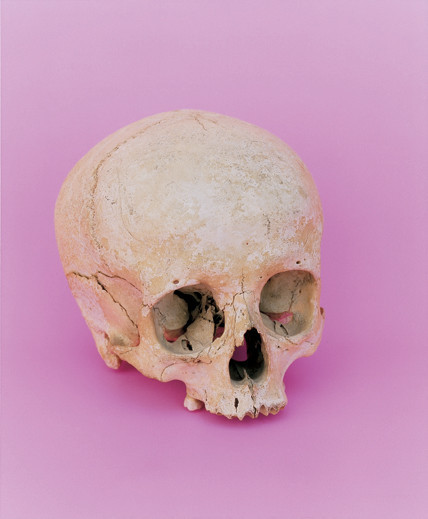
Because it’s a more interesting journey! That said, I have set boundaries for myself. It’s quite easy to turn a photograph into a painting or a film, but I wanted to create a space where the viewer could reconsider what photography as a medium can do.
First of all, it had been many years since I last exhibited in Iran, and I really wanted to show my work here again—that was the initial motivation. Also, because my work isn’t very well-known in Iran, I wanted to offer both a broad overview of my work and select specific pieces for this exhibition. All the works you see in this show were made at least ten years ago but have been curated specifically for this space.
Without a doubt, working on the installation after arriving in Tehran was the most exciting part. Especially because several pieces were produced here, and I thoroughly enjoyed collaborating with everyone involved in bringing the show together.
The statement is actually part of a longer text meant to introduce myself, so in a way, it’s connected to my biography. It’s not that I feel a lack of belonging, but rather that the kind of belonging I experience isn’t fixed or easily accessible. It’s more complex and nuanced. That openness, that multiplicity, is deeply tied to my emotions.
Not at all. In fact, what’s important to me is that none of them take center stage. Despite the limitations of time, space, and resources, I wanted to create a sense of material diversity, in scale, framing, and even through interventions like painting the gallery’s walls and floors, allowing the space itself to become part of the exhibition.
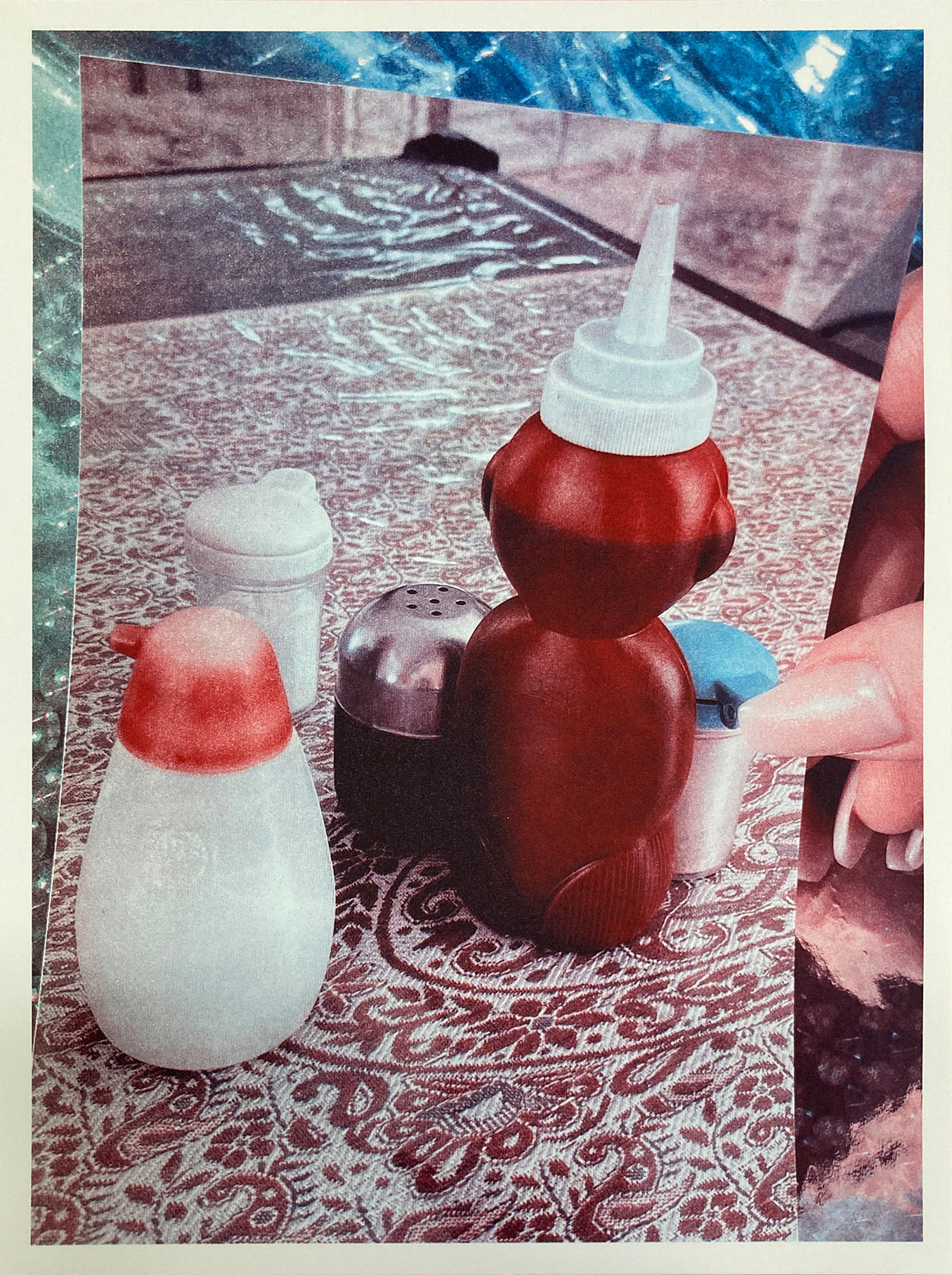
For example, if you look at the series of lithographs, each image on the wall is the result of several layers of process. They began with simple photographs taken during a trip, which were later printed, rephotographed in a different location, and then transformed again through lithography. These prints aren’t standard four-color works, they’re dual-channel prints using additional pigments. Therefore, these works evolved through repetition, and it seems that each stage altered their character in a different way. All these layers together create an image where the stages can no longer be separated, they merge into a single, inseparable entity.
It’s not just photography, installation, and architecture, the viewer’s presence is also a crucial element. The way they enter and move through the exhibition matters deeply. In arranging the works, I think of the viewer’s movement and see them as part of the work itself; the show has no real meaning without them. Also, I believe the exhibition space has inherent qualities that are often overlooked but I like to let the space itself participate in the exhibition.
It’s easy to describe these works as abstract, but in fact, they originate from analog photographs, from real scenes I once captured. If we return to that initial moment, the conversation about the photographic medium becomes far more interesting.
First, it was through the Baygan Foundation, located above Emkan Gallery, that I met the gallery team. Once I saw the space and its unique architectural play, it immediately felt right, I knew I wanted to show my work here.
Not exactly, I’ve always traveled back and forth to Iran. But my life had been structured in a way that didn’t leave much room for certain projects. I had two young children, who are now older. Also, during these years, the art scene in Iran changed dramatically. Everything has evolved over the past two decades, and I have deep respect for what’s happening here now. That’s why, at this point, it felt especially important to show my work in Iran.
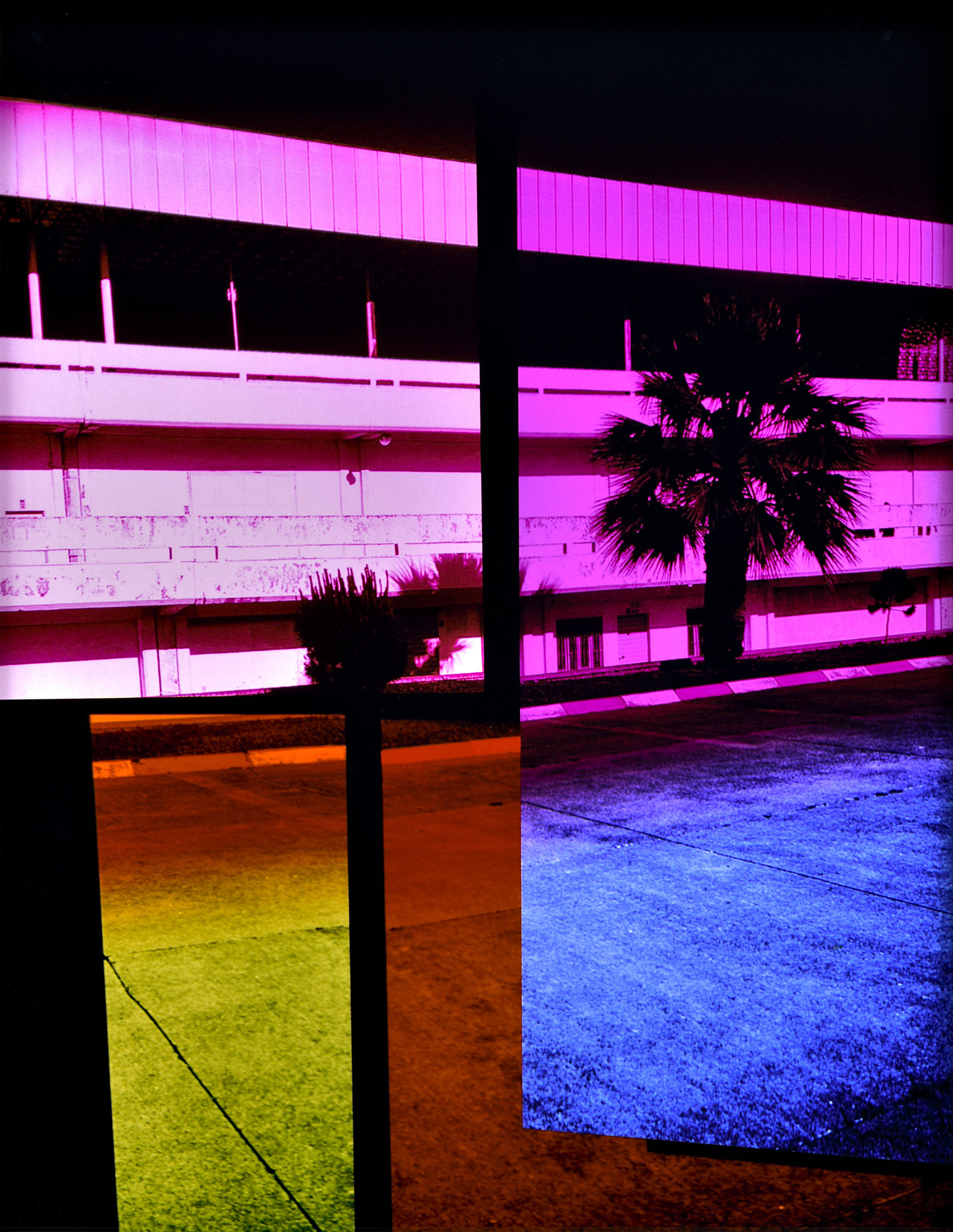
Several factors shaped the choice of materials in this exhibition. I wanted to include both small and large scale works and to use a variety of printing techniques, from simple silkscreens to more complex processes. Great care also went into selecting the frames, allowing the material interplay to become more visible and dynamic.
20 October, 2025 , Emkan Gallery, Tehran, Iran
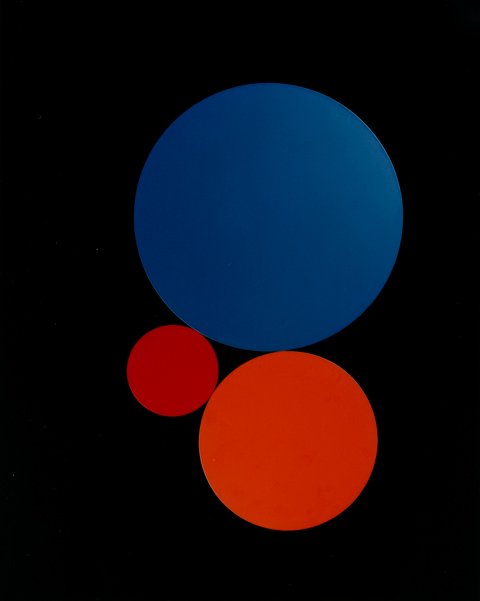 Kreise
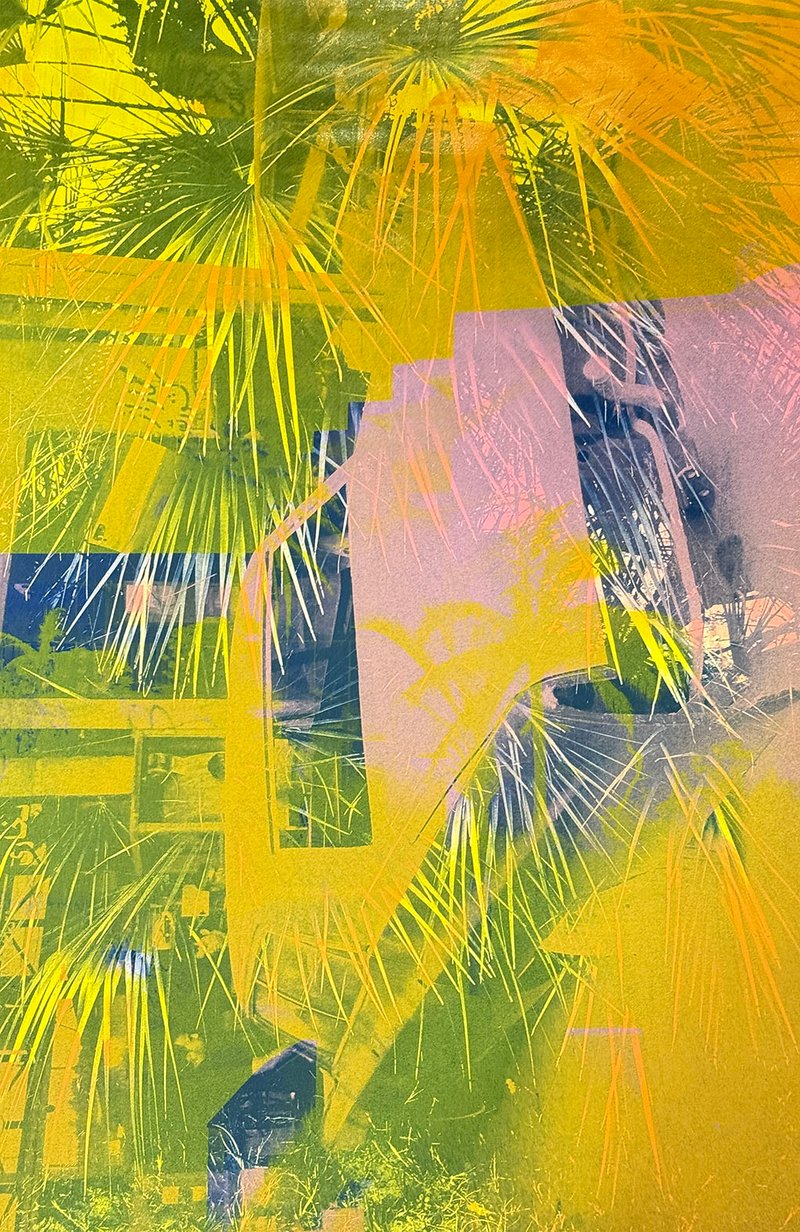 Isfahan and Palms
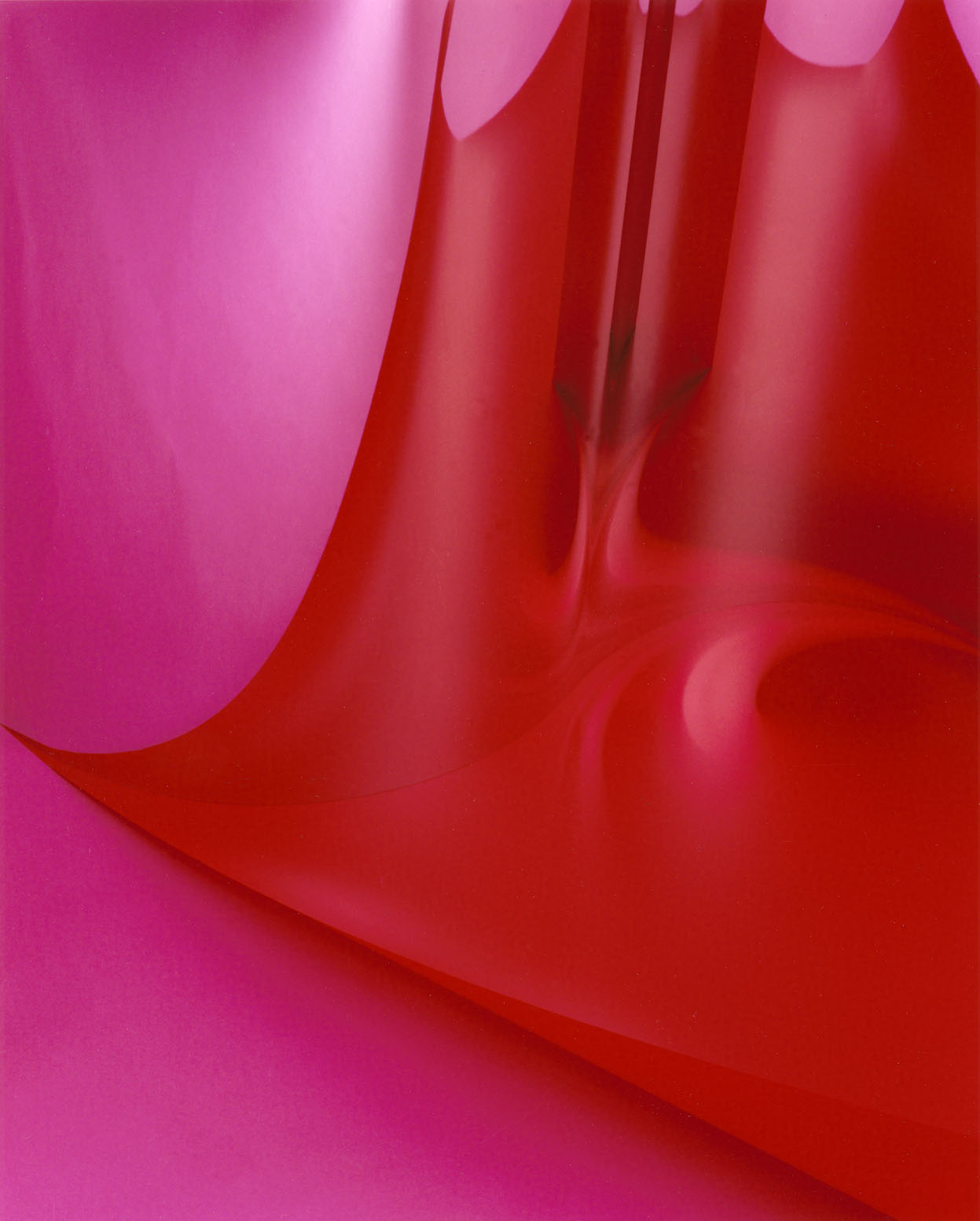 Rot-Pink 01