Loading magazine…
08 Jan 2022
Loading magazine…
Original text in Farsi by Safa Ghasemi (1)
Translated to English by Rasad art projects
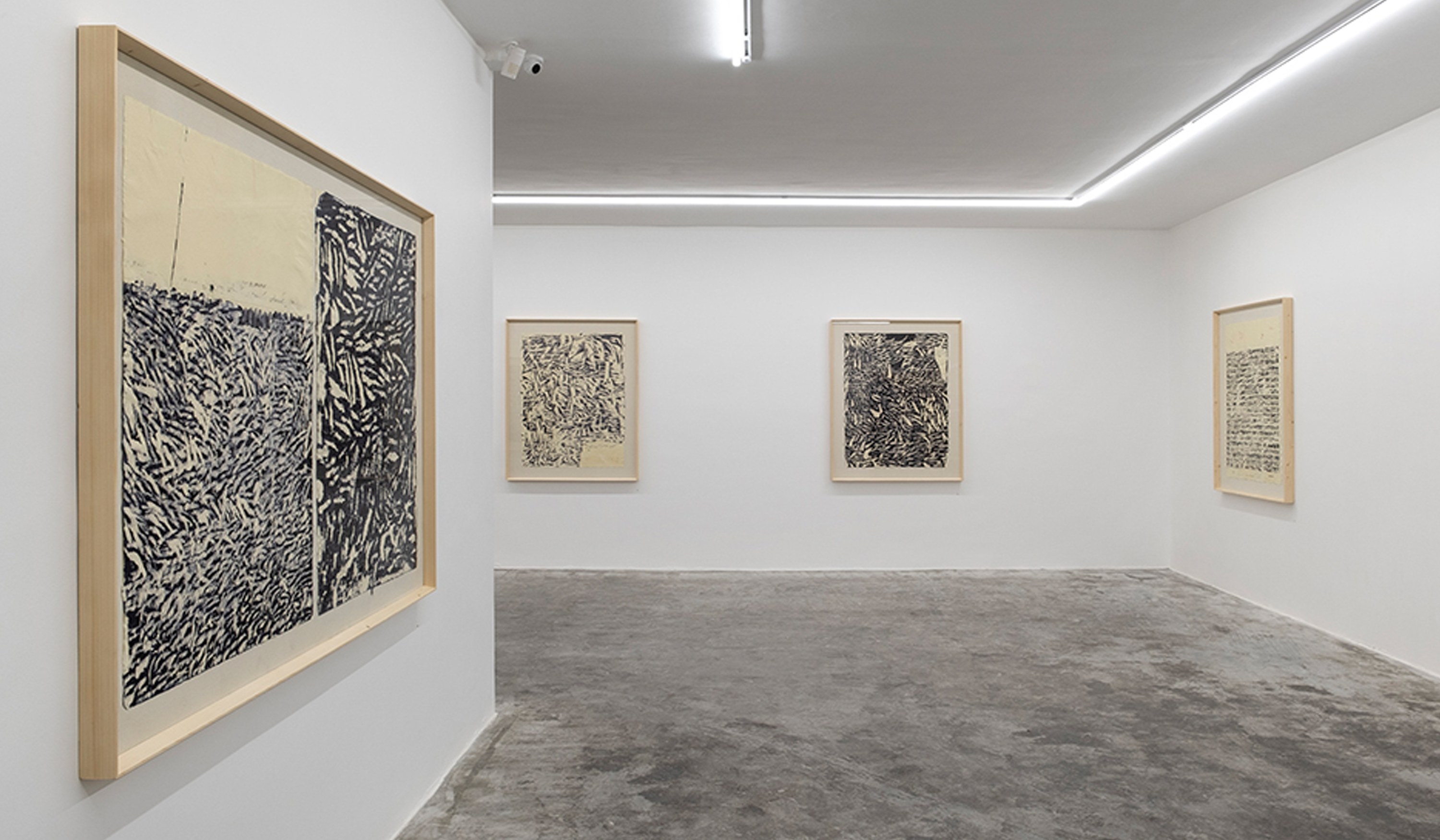
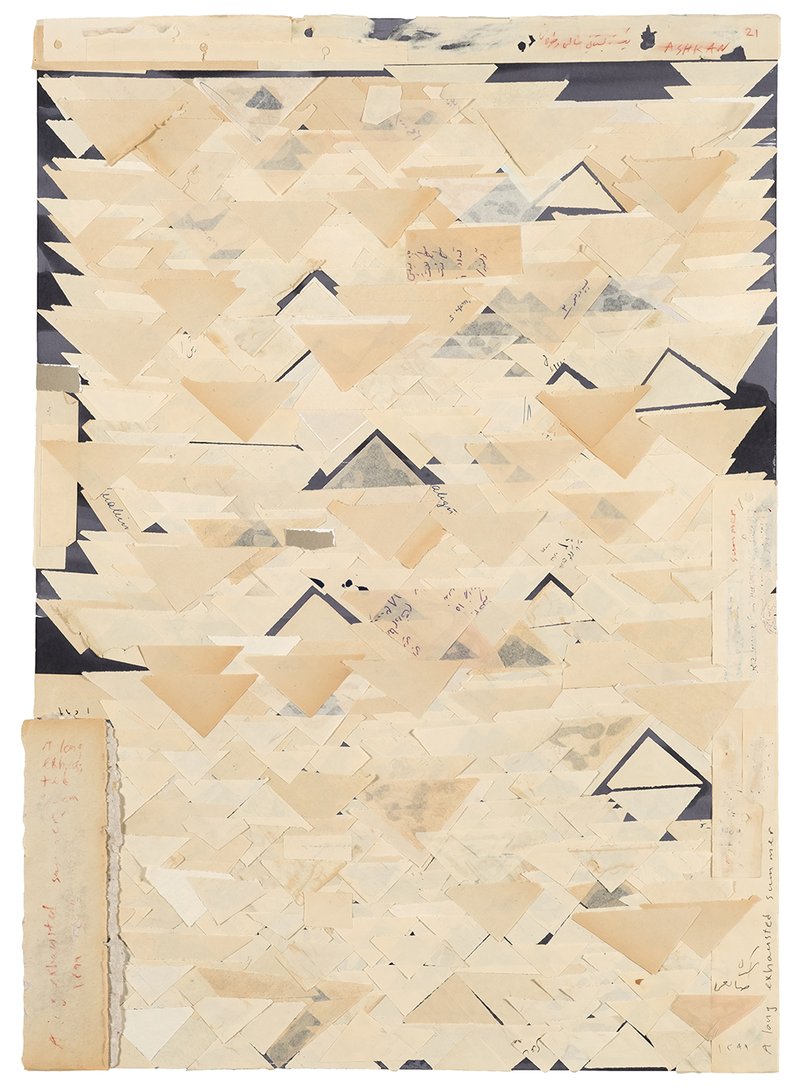
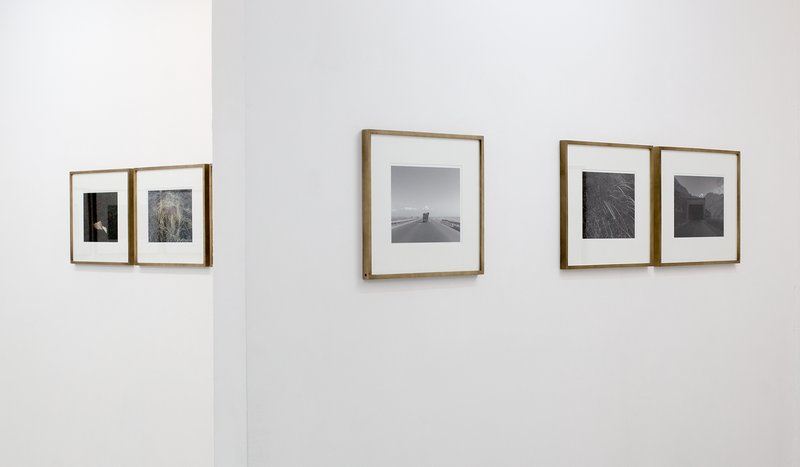
Viewing Ashkan Sanei's artworks as an experience looks like watching the unfinished images as if after being created in the artist's studio, continue their lives before the eyes of the audience. "Contact at a Distance" exhibition is a collection of the artist's works within the last two years in line with his adventuristic artistic approach. They are mostly created on paper, using various mediums and materials such as drawing, making a collage, coloring, and creating stains and ruptures.
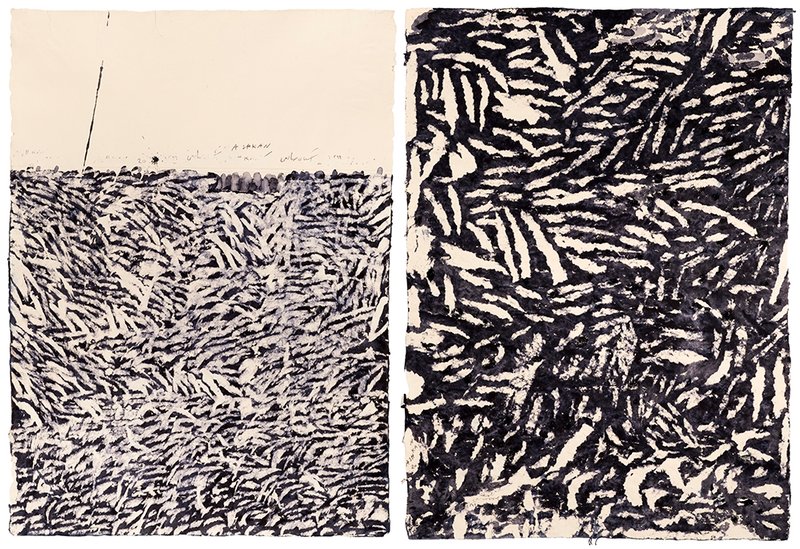
These collections can be distinguished through their form and the artist’s actions in a couple of ways: namely through collages that follow previous experiences by repeating a motif or a structure, infrequently using unexpected materials on a two-dimensional work, and generating some kind of geometrical chaos and a fractal system despite the work’s featured harmony. Another group creates organic mass shapes by repeating color spots and by deviating from visual readability, referring to a form of sketching which in the evolution process of Iranian calligraphy, led to the consolidation of the letters and some sort of manipulation of full and empty spaces in the shape of Persian letters, and now it is called for as a way of rereading the historical visual identity in today's visual language. Even by blurring and repeating his signature, Sanei continues to interact with it in the same way as he does with his selected motifs, despite the fact that this is the place where he is supposed to record a short section of the current history.
Although the various collections of his works may look different in their morphology and creation trajectory, but their themes are interlinked with each other. The "Archives" collection includes collaged folders of lines, materials, and images of the other works. One can seek out the inner layers of the artist's thoughts through them. For an archive is a source for utilizing memory to both remember and forget, it shapes perception and knowledge over time, and perhaps it is the common thread among these several collections in the exhibition, interconnected through their contents despite their different forms.
In the "Clusters of Stars" collection, dark colors dominate the work of art, as if the artist who had previously held a single tunneled vision and had sought to discover the constituent particles of meaning, would now distance himself from the everyday world and hold a cosmic position.
Ashkan Sanei brings in the edited and sometimes reconstructed pieces of the real world to the realm of his artwork, that is neither representative nor figurative. Hence, this art would not put an end point to its own expressiveness, and grows its own life on the exhibition scene. Sometimes consciously and sometimes unconsciously, he moves on the borders and questions them at every moment: namely, the borders between painting, drawing and collage, and the constructed borders between established imagery of the West and mystified tranquility of the East, as well as the borders between pure abstraction in forms and recollection through familiar forms. Sanei introduces his adventuristic approach and artistic action even into the naming of his collections. With metaphoric and poetic names inspired by literature, such as "Oblique on a Sandy Beach" and "A Long and Empty Summer", he enables transition between abstraction and worldly meaning.
Being process-oriented is the most notable characteristic of Sanei's artworks. His method of working and displaying artworks is to expose the process of ideation and creation. With the combination of common materials and unconventional ones, he creates an artwork and develops it through consecutive layering and peeling various surfaces. While maintaining intellectual discipline, he introduces probabilities and coincidences into his work by successive eliminations and selections among whatever would happen. As though he is guided by a constant necessity to understand the surrounding existence and a firm assiduity to observe and express it. As an art creator, Sanei is simultaneously present and absent, such an observer who sometimes intervenes in the surrounding environment and takes advantage of it to create his artwork, but does not insist on having total control over the entire process of giving some meaning to his work. Mapping out his stream of unconsciousness makes a significant part of his works’ identity. In other words, mixing chances with choices through ordered mathematical repetitions, and then distorting them would get the audience involved in the creative process while evoking a sense of aesthetic pleasure.
Footnotes:
Cover and slider image:
08 Jan 2022
sequel